What Is Local SEO? How To Do Local SEO

Summary: Local SEO for small businesses
- Local SEO helps businesses appear in Google Search and Maps when people look for nearby products or services, such as “plumber in Kent” or “café near me”.
- Google’s local results are mainly shaped by relevance, distance and prominence, so rankings can vary depending on the searcher’s location and query.
- A complete, accurate Google Business Profile is essential. Keep your business name, category, contact details, opening hours, service area and photographs up to date.
- Support your profile with useful local website content, naturally targeted service and location pages, accurate directory listings, genuine customer reviews and relevant local links.
- Measure results through local search visibility, website clicks, calls, enquiries, bookings and direction requests, then use the data to improve your local SEO over time.
Case study – local SEO for Ability Bathe Devon
Ability Bathe Devon is a family-run bathroom design and installation company with 35 years of experience in the industry. UWP Group provides the business with local SEO services.
- We launched new area-specific service pages on the website for different parts of Devon, for Torquay, Plymouth and Exeter, in June 2025 with relevant local keyword targeting.
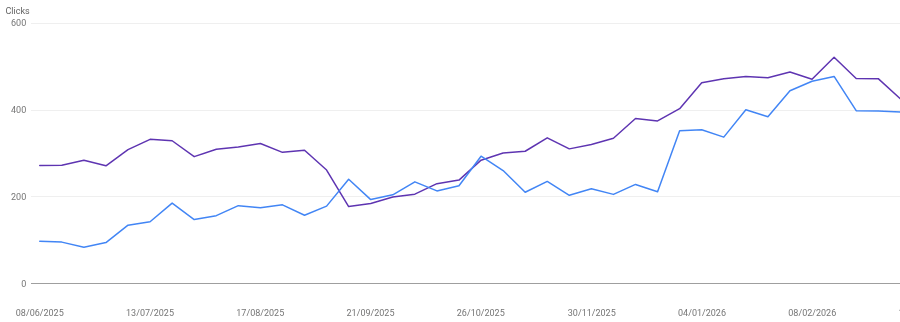
- This contributed to a 380% increase in clicks to the website, from roughly 100 a week to 478 a week at the peak, between June 2025 and February 2026.
- Also contributing to the increase in traffic were a series of high-visibility blogs answering common consumer questions.
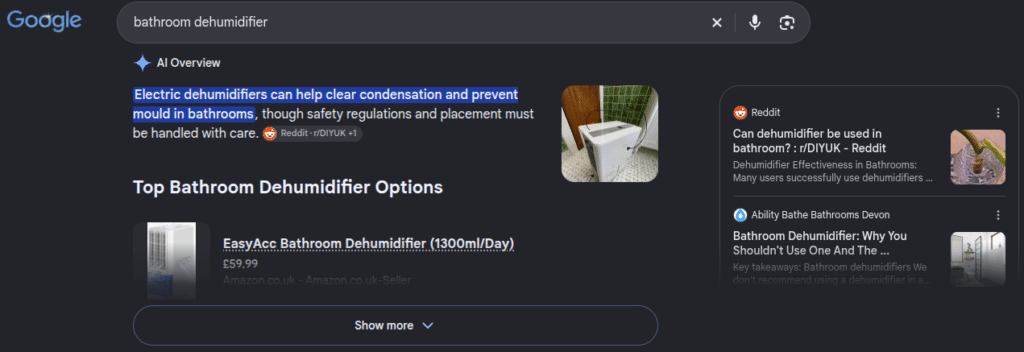
- Several of these feature as sources in Google’s AI overviews: at the time of writing (9 October 2026) a punchy article we first published in July 2025, about whether you can use a dehumidifier in the bathroom, is still a cited source when you search ‘bathroom dehumidifier’.
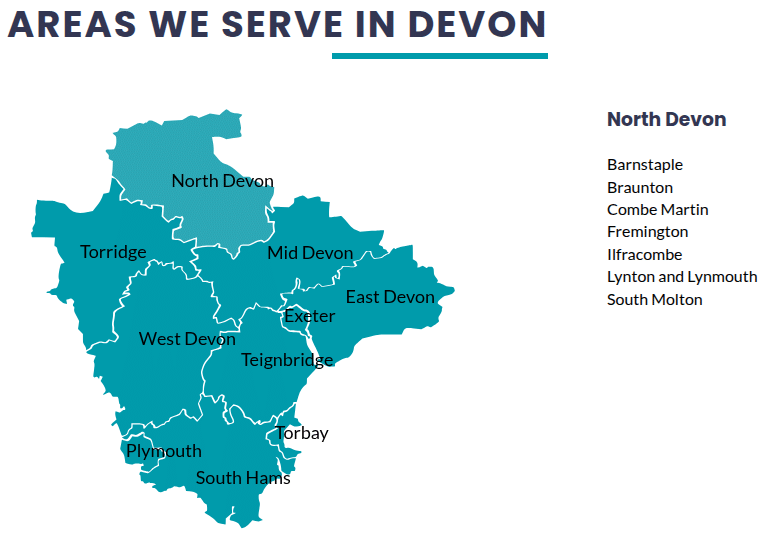
- We also added an interactive local map to the website.
- It features a long list of all the different parts of Devon serviced by Ability Bathe, for consumers and Google to read, with the relevant place names appearing when you hover over specific parts of the map.
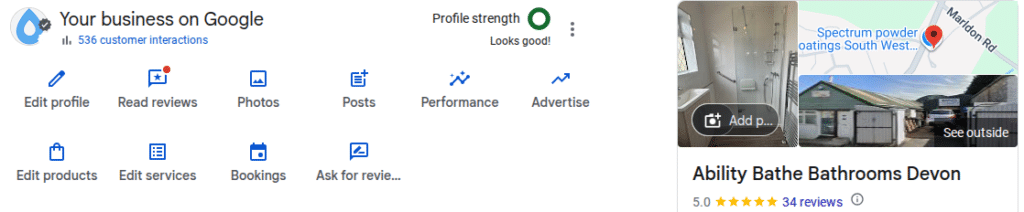
- We also keep their Google Business Profile updated regularly, to keep Ability Bathe Devon appearing as a nearby business in Google results for relevant local queries.
What is local SEO?
Local SEO is about improving your business’s visibility in search results, targeting people looking for products or services in a particular area.
It helps businesses appear in places such as Google Search and Maps when someone searches for “plumber in Kent” or “café near me”.
It’s more than just adding your location to a website though. You can improve your business’ local presence by:
- Keeping its Google Business Profile complete and accurate
- Creating useful pages about your services and locations
- Maintaining consistent contact details across relevant directories
- Earning and responding to customer reviews
Why is local SEO important?
Local SEO matters because it connects your business with people who are ready to visit, call, book or at least make an enquiry.
Accurate opening hours, contact details, directions and service information online make it easier for potential customers to choose and reach your business. Reviews and mentions from other websites can also help build trust.
Local results are based mainly on relevance, distance and prominence: how well a business matches the search, how close it is to the searcher and how well-known it is, Google says.
You can’t control every factor, particularly distance, but you can make their information clearer, more complete and more useful.
For shops, restaurants, tradespeople and other locally focused businesses, local SEO can support both your online visibility and enquiries. Its success is best judged not just by rankings, but by the calls, visits and bookings it helps generate.
How do local search results work?
Local search results are the listings Google shows when it thinks someone is looking for a nearby business, service or place.
A search such as “Italian restaurant” may trigger results near the searcher, while “Italian restaurant in Liverpool” gives Google a location to use.
These results can appear in Google Maps, a map-based local pack in Search, and standard organic listings.
Local rankings are mainly based on three factors:
- Relevance: How closely a business matches the search. Complete, accurate Business Profile information helps Google understand what the business offers.
- Distance: How far the business is from the searcher, or from the location named in the search. If someone hasn’t shared their location, Google uses what it can determine about where they are.
- Prominence: How well-known the business is. Google says this can include information such as links to the business and its reviews.
For example, a nearby business may not be the best match for a particular search, while a well-known business may be too far away. Results can therefore vary depending on where someone searches and what they type.
You can’t pay Google for a better local ranking as a business. You can improve the information Google uses by verifying your Business Profile, keeping the details up to date, responding to reviews and adding useful photos.

What is a Google Business Profile?
It’s a free Google business profile listing that you can manage on Google Search and Maps. It helps potential customers find key information about your business, such as your:
- Address
- Service area
- Opening hours
- Contact details
- Website
- Photos
- Reviews
You can also use your business profile to share updates, respond to reviews and if relevant, let customers book services or make reservations.
To edit your profile, you need to add or claim it for your business and complete Google’s verification process.
Keeping the information accurate and up to date helps customers understand what you offer and how to contact or visit you.
The business profile is especially useful for businesses that serve customers in a particular area, but it doesn’t guarantee a particular position in local search results.
However, according to Google data for 2026, businesses with complete profiles receive 7x more clicks and 29% of customers are more likely to consider purchasing from those with a detailed profile.
How do you research local keywords?
Find the phrases people use when looking for your services in the areas you serve. Then you can match those searches to the right pages on your website:
- List your services and locations: Note what you offer, who you serve and the towns, neighbourhoods or regions you cover.
- Add keyword variations: Combine services with locations, such as “boiler repair in Bristol” or “Bristol boiler repairs”. Also consider “near me” searches, local questions and phrases about specific needs, such as “emergency boiler repair”.
- Use keyword tools for ideas and estimates: Google Keyword Planner can generate suggestions from seed terms or a website and lets you narrow results by location and language. Paid tools include platforms such as Ahrefs, Semrush, etc.
- Check your existing search data: In your Google Search Console, review the queries bringing impressions and clicks to your site. Filter by relevant service or place names to find terms you already appear for and opportunities to improve.
- Look at the search results: Search your target phrases from the relevant area to see whether Google shows maps, local businesses, service pages, directories or guides. This helps reveal what searchers likely want and what kind of page to create.
- Group keywords by intent: Put phrases about the same service and need together. Map each group to a useful page rather than creating a separate page for every minor wording variation.
Prioritise relevant searches that match your customer needs and the areas you serve. Use the phrases naturally in page titles, headings and copy.
How do you optimise your website for local search?
Optimise your website for local search by making it clear what you offer, where you operate and how customers can contact you.
Include:
- Accurate business details
- Opening hours
- Service areas
- Click-to-call contact options on key pages
Create useful service and location pages for the areas you serve.
Use local terms naturally in titles, headings and copy, but try to avoid making nearly identical pages that are only really swapping the place names.
Make sure Google can crawl and index your site and that the pages work well on mobile. Google takes a mobile-first approach, using the mobile version of content for indexing and ranking.
Add an accurate LocalBusiness schema and link key pages together. Also track the local clicks, enquiries, calls and bookings through Search Console and analytics.

What is ‘local business schema’?
You add local business schema code to a website, it helps search engines understand key facts about a business in a standardised, machine-readable format.
You usually add it as JSON-LD structured data markup in the page’s HTML. It can identify the:
- Business name
- Address
- Telephone number
- Opening hours
- Business type.
For example, if you own a restaurant, you might use the more specific Restaurant schema type rather than the broader LocalBusiness type.
The info should match what appears visibly on the website pages and in the Google Business Profile.
Local business schema can help Google interpret a business correctly, but it does not guarantee higher rankings or enhanced search results.
Citations and business directories
Citations are online references to your business, usually its name, address and telephone number. They appear on business directories, maps, review platforms, local websites and industry-specific listings.
Accurate citations help customers find and contact a business. Consistent information makes it easier for search engines to understand which business and location a listing refers to.
Prioritise quality and relevance, rather than submitting your details everywhere. Check regularly for old addresses, incorrect phone numbers, duplicate listings and outdated opening hours in your directory listings.
Keep the same business name, address and telephone number across your website and important listings.
Reviews and online reputation management
To manage your customer reviews online, check what customers are saying about your business, regularly, then respond appropriately. Their (ideally 5 star or equivalent) reviews can help build trust with potential customers,
Thoughtful replies show that you value their feedback. Google allows verified businesses to respond publicly to reviews through the Business Profile.
If your business is on other review platforms e.g. Trustpilot, check these regularly too, as well as industry specific ones such as Checkatrade.
Ask customers for feedback after an interaction, using a simple link. Don’t buy reviews or offer rewards for positive feedback because Google prohibits incentivised and misleading reviews.
Reply promptly and professionally to both positive and negative comments. Thank your happy customers, acknowledge any concerns and move detailed complaints offline where appropriate.
Regularly check Google and relevant industry platforms for inaccurate, harmful or policy-breaking reviews, then report them through the relevant process.
Local content
Local content marketing helps your business connect with customers in the areas you serve. Rather than simply adding place names to informational blog posts, create useful content that answers genuine local questions.
For example, you could publish local service guides, area-specific FAQs, case studies from nearby projects or advice about access, parking, delivery and call-out times.
Seasonal content, local events and partnerships with community organisations can also demonstrate your local knowledge and expertise.
Where relevant, link this content to key service and location pages. Include first-hand details, original photographs and practical information that customers cannot easily find elsewhere.

Local link building and digital PR
Local link building and digital PR involve earning relevant mentions and links from trusted websites in the areas your business serves.
These could come from local newspapers, suppliers, event organisers or nearby business partners, for example.
However, focus on relevance and editorial value rather than volume.
For more details, take a look at our PR service.
Social media and other platforms
Social media and other online platforms can support your local SEO too.
Choose the platforms your local audience tends to use. If you’re a local restaurant, prioritise Instagram and booking platforms, while a tradesperson may benefit more from Facebook, for example.
Share useful local updates, completed projects, events, offers and photographs where appropriate. Reply to questions and messages promptly.
Google Business Profile can link customers to a business’s website, booking links and social media (in select regions), so keep these details updated.
Local SEO for different business types
Local SEO priorities vary by business type, so start with the information customers need before they contact or visit you. For example:
- A restaurant should focus on menus, opening hours, bookings, dietary information and current photographs.
- A retailer can add product details, stock availability, directions and collection options.
- Service-area businesses, such as plumbers or cleaners, should explain the areas they cover, their services, call-out arrangements and how to request a quote.
Here are the Google Business Profile guidelines for representing your business.
Measuring local SEO performance
To measure your local SEO performance:
- Google Business Profile performance data can show calls, website clicks, direction requests, bookings and other customer interactions.
- Google Search Console monitors local search queries, impressions, clicks, click-through rate and average position.
- Analytics or a CRM can track enquiries, phone calls, bookings and sales.
Monitor your visibility for priority local searches. Set a baseline before making changes to your strategy, then review the new results monthly to see which improvements are helping.
Common local SEO mistakes
Common local SEO mistakes often come from treating it as a one-off task rather than an ongoing process, for example:
- Businesses often leave their Google Business Profile incomplete, use inaccurate opening hours or choose the wrong category.
- Others have inconsistent names, addresses and phone numbers across their website and directories.
- Some create thin location pages that simply swap one town name for another.
Many businesses also focus solely on rankings but it’s important to track your calls, enquiries, bookings and website visits too.
Regularly update business details, respond to reviews and check that key pages are still working well on mobile.

A simple local SEO action plan
Start with the basics, then build local visibility over time:
- Claim or verify your Google Business Profile.
- Check that its name, category, address or service area, telephone number, opening hours and website link are accurate.
- Update your website with clear service pages, local contact details and useful information about the areas you genuinely serve.
- Check major directories and correct inconsistent details.
- Create a simple process for requesting and responding to genuine reviews.
- Track calls, enquiries, bookings and local search performance.
- Add photos to your Google Business Profile, publish useful local content and review the results each month, focusing on changes that improve the customer experience and generate leads.
UWP is a leading local SEO agency
If you need a local SEO company to reach more potential customers nearby, UWP Group is here to help.
We are digital marketing experts with many 5-star reviews over several years, as a London SEO agency that works with many local businesses, wherever they are based in the UK or further afield.
We hope you found this guide useful. If so, check out our industry-specific SEO guides, including:
Recently we have also published in-depth guides on:
For local SEO services, please don’t hesitate to contact us.